

Colling Media Wins 2026 AZIMA Mastery Award for AI Campaign That Increased Conversions 57%
Phoenix advertising agency earns the highest recognition in the Best Use of AI category for transforming higher education marketing with 139 landing pages, verified content, and measurable enrollment marketing improvements.
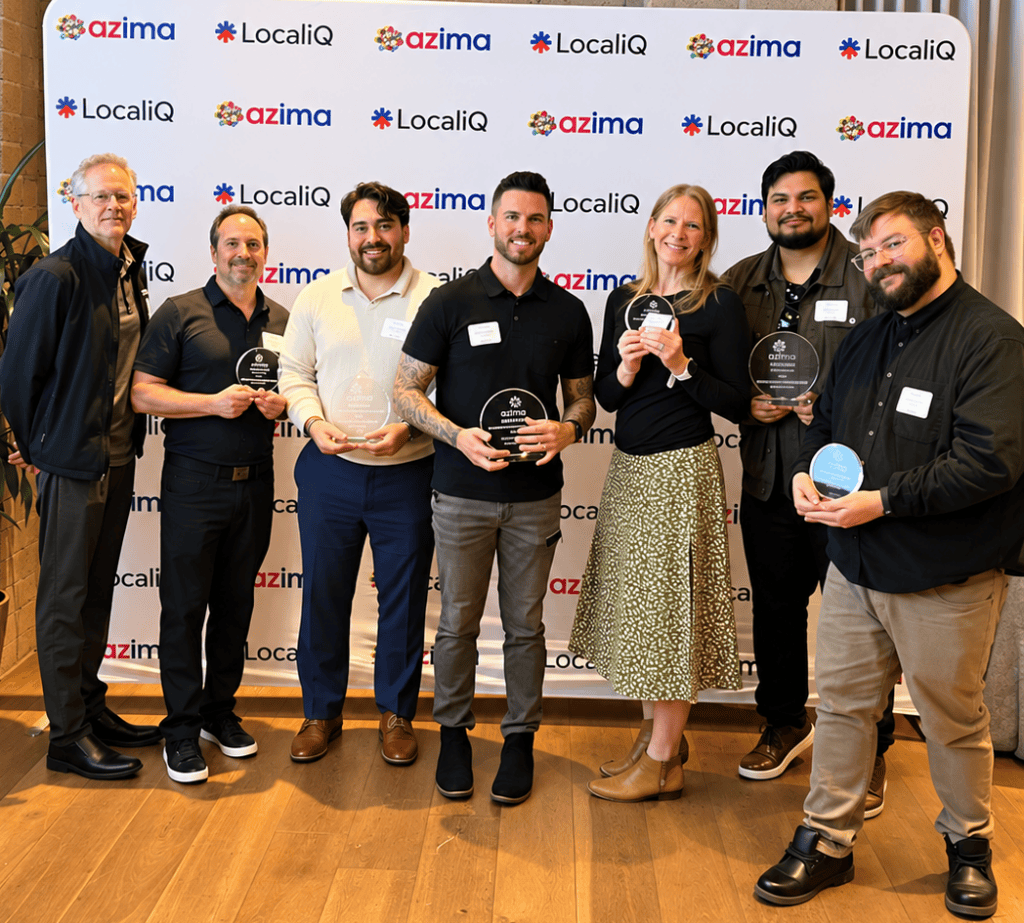
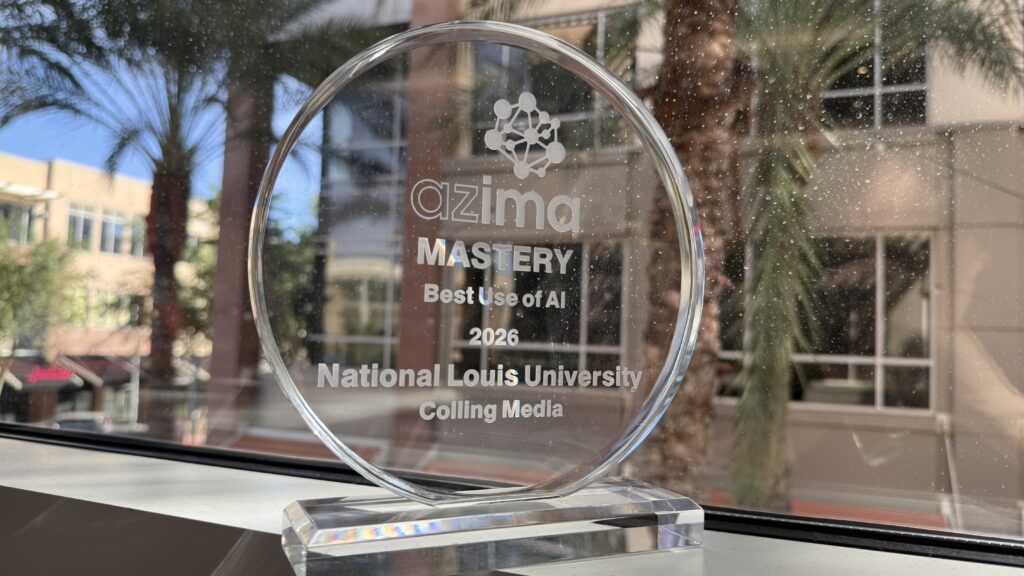
PHOENIX, AZ — Colling Media, a Phoenix-based full-service advertising agency, earned the Mastery Award for Best Use of AI at the 2026 Arizona Innovation Marketing Association (AZIMA) TIM Awards for its work with National Louis University (NLU).
The recognition, announced at the October 22 awards ceremony in Tempe, Arizona, honors an AI-powered marketing initiative that transformed how the university creates, verifies, and deploys personalized landing pages for prospective students.
In approximately six weeks, Colling Media built and audited 142 landing page experiences, publishing 139 by June 30, 2026. The project also established an AI-assisted content production process designed to maintain factual accuracy, compliance, and consistency across more than 100 academic programs.
The results extended beyond production efficiency. In a subsequent July performance comparison, the new landing pages achieved a 57% relative increase in lead conversion rate, from 7.52% to 11.79%.
The campaign demonstrated that AI could do more than accelerate content production. With the right strategy and safeguards, it could improve the experience for prospective students and the performance of paid advertising.
The Challenge
More Than 100 Academic Programs. Just 14 Landing Pages.
National Louis University offers 112 degree and certificate programs, serving prospective students with different academic interests, professional goals, and educational needs.
But its paid media campaigns relied on just 14 landing pages.
A prospective teacher, MBA candidate, and psychology student could respond to three different advertisements only to arrive at the same generalized landing page.
Instead of immediately finding information relevant to their interests, prospective students had to navigate further to identify the right program.
The disconnect also affected advertising performance.
Google Search campaigns were losing substantial impression share to ad rank and relevance challenges. In two priority areas, Undergraduate Studies and Graduate Psychology, the university was losing 67.8% and 70.2% of available impressions, respectively.
The university needed more relevant landing page experiences to better align student searches, advertising messages, and academic program information.
And the deadline was approaching.
With the university’s new fiscal-year media campaigns scheduled to launch in early July, Colling Media had approximately six weeks to research more than 100 programs, develop personalized experiences, verify factual claims, integrate lead forms with Salesforce, and update advertising destinations across multiple platforms.
Traditional landing page production could not meet that timeline.
The challenge: Deliver more than 100 personalized, accurate, compliant landing page experiences in approximately six weeks without sacrificing quality or advertising performance.
The Strategy
Use AI for Speed. Build a System for Accuracy.
Rather than asking AI to independently write hundreds of landing pages, Colling Media designed a structured production system combining artificial intelligence, reusable templates, verified program data, automated quality checks, and human oversight.
The strategy separated landing page development into three critical components.
Reusable Page Structures
Colling Media developed standardized templates for individual academic programs, university branding, areas of study, colleges, and multi-program experiences.
This created a consistent foundation for scalable landing page production while allowing content to remain relevant to each program.
Verified Program Intelligence
Instead of relying on open-ended AI prompts, the team built structured intelligence profiles using approved academic and career information sources.
These profiles supplied verified program details before AI-generated content was drafted.
This was especially important in higher education, where inaccurate claims about accreditation, licensure, tuition, or career outcomes can create significant compliance and reputational risks.
Centralized Conversion Routing
A centralized registry connected each landing page to the appropriate Salesforce destination using verified curriculum identifiers.
This allowed prospective student inquiries to flow into the correct academic program and also supported a more relevant post-conversion experience.
The guiding principle was straightforward:
Let AI create speed. Let the system create consistency. Keep people responsible for judgment.
The Solution
Building an AI-Powered Landing Page Production System
Colling Media began by manually creating a single MBA landing page, establishing the structure and experience that would serve as the foundation for the larger system.
From there, the team combined AI-assisted research, structured content generation, marketing technology integrations, and independent quality assurance.
Developing Program-Specific Content at Scale
The system used information from university program sheets, NLU’s academic catalog, SmartCatalog, and the U.S. Bureau of Labor Statistics to develop 106 structured program intelligence profiles.
The process also incorporated 93 authentic student and alumni stories and an inventory of 2,078 website images to support content relevance and authenticity.
Rather than allowing AI to invent program information, each landing page was developed from a structured research profile.
Connecting Each Page to the Correct Student Journey
Every experience was connected to the university’s Salesforce infrastructure through a centralized curriculum registry.
This improved consistency between landing page content, academic program selection, and form routing.
The team also introduced a new post-conversion experience that presented prospective students with an Apply Now option related to the program they had just explored.
Previously, students completing a lead form did not receive a comparable program-specific continuation path.
Creating Multiple Layers of Quality Control
Accuracy and compliance were central to the system.
Every landing page was required to pass a nine-check automated quality assurance process, followed by independent AI review using a defined evaluation rubric.
Two consecutive clean independent reviews were required before a page could advance.
Human reviewers retained final approval authority.
These safeguards identified issues that could otherwise have appeared in published content, including:
An unsupported accreditation claim.
Misleading salary information.
A fictional testimonial appearing across 90 pages.
Incorrect Illinois licensure language on six Florida landing pages.
These issues were identified during review, before publication.
Updating Advertising to Match the New Experiences
Finally, Colling Media reviewed and redirected existing advertising destinations, including 98 Google ad groups, 139 Meta ads, and Bing advertising.
The result was a more consistent experience connecting prospective students’ search intent, advertising messages, and relevant university program information.
The Results
139 Published Landing Pages. Zero Fabricated Claims in Final Verification. 57% Higher Conversion Rate.
The project delivered results across three essential areas: production scale, factual accuracy, and paid media performance.
| Key result | Performance |
|---|---|
| AI award recognition | 2026 AZIMA Best Use of AI — Mastery |
| Landing pages published by June 30 | 139 |
| Total experiences built and audited | 142 |
| Structured program intelligence profiles | 106 |
| Fabricated claims in final verification | 0 found |
| Previous landing page conversion rate | 7.52% |
| New landing page conversion rate | 11.79% |
| Relative conversion rate improvement | +57% |
| Campaigns showing improvement | 8 of 8 |
| Post-conversion Apply Now continuation rate | 55% |
Production Scale: From 14 Landing Pages to 139 Published Experiences
The university expanded from 14 existing paid media landing pages to 139 newly published experiences by June 30, with 142 built and audited overall.
What would traditionally have required extensive individual production was accomplished through reusable structures, AI-assisted content development, centralized data, and automated validation.
Accuracy: Verified Content With Human Oversight
Approximately 90 factual claims, including more than 50 Bureau of Labor Statistics salary figures, underwent independent verification.
The process found zero fabricated claims in the final verified content.
Importantly, this was not because AI generated flawless material on the first attempt.
The quality-control system identified factual and compliance issues during production, allowing the team to correct them before prospective students encountered the content.
Performance: A 57% Relative Improvement in Lead Conversion Rate
The clearest performance result emerged immediately following the production period.
From July 1–15, 2026, the new landing pages converted 11.79% of sessions into leads, compared with 7.52% for the previous experiences.
That represented a 57% relative lift in conversion rate, or an improvement of 4.27 percentage points.
The comparison held campaigns, keywords, budgets, and dates constant, changing the landing page destination.
All eight evaluated campaigns improved, and the overall conversion rate difference was statistically significant at the 95% confidence level.
Paid Search Relevance Improved
The more relevant landing page experiences also coincided with improvements in Google Search auction performance.
The percentage of available impressions lost to ad rank declined across several priority campaigns:
| Campaign | Before | After |
|---|---|---|
| Undergraduate Studies | 67.8% | 39.0% |
| Teacher Preparation | 67.1% | 34.7% |
| Graduate Business | 52.3% | 40.5% |
These changes reduced barriers to competing in relevant search auctions and supported greater advertising reach.
A Better Path From Inquiry to Application
The system also improved what happened after a prospective student submitted an inquiry.
Between July 1 and July 27, 2026, the new thank-you experiences recorded 1,868 page views. Of those, 1,021 continued to the program-specific Apply Now destination.
That represented a 55% continuation rate.
The previous landing page experience offered no comparable direct path.
2026 AZIMA Best Use of AI Award Conclusion
Award-Winning AI That Delivers More Than Faster Content
Colling Media’s 2026 AZIMA Best Use of AI Mastery Award recognizes an approach that goes beyond simply generating marketing content with artificial intelligence.
The project addressed a complex business challenge: how to produce personalized, accurate, compliant academic program experiences at a scale and speed traditional production could not achieve.
AI helped accelerate research, organization, and content development.
Structured templates, verified source material, automated checks, and human reviewers provided the controls necessary to make that content trustworthy.
And the resulting landing page experiences improved advertising relevance, lead conversion performance, and the path from initial student interest to application.
The takeaway for marketers: The greatest opportunity for AI isn’t just creating more content. It’s building better systems that combine speed, accuracy, personalization, and measurable results.
For Colling Media, the recognition reinforces the agency’s mission: Helping People Succeed Through Better Advertising Results.
Performance methodology: Landing page production and verification results reflect the June 2026 project period. The 57% relative lead conversion lift reflects a separate July 1–15, 2026 comparison of previous and new landing page experiences across eight campaigns. The 55% Apply Now continuation rate covers July 1–27, 2026. These performance findings followed the landing page production period and should not be interpreted as independently verified award judging criteria. Results are based on the National Louis University campaign data included in Colling Media’s award submission.
Award recognition: 2026 AZIMA TIM Awards, Best Use of AI — Mastery, October 22, 2026.