

For over a decade, your marketing team has meticulously crafted an SEO playbook. You’ve chased keywords, built backlinks, and optimized meta descriptions. But what if that entire playbook is about to become obsolete? A new force is reshaping the search landscape, and it’s called Generative Engine Optimization (GEO). This isn’t just another marketing acronym; it’s a fundamental shift in how your customers will discover and interact with your brand.
This article will break down the critical differences between traditional SEO and the new reality of GEO. We’ll explore why your current SEO efforts might soon be invisible and provide a clear, actionable framework for how to start building a GEO strategy that will keep you ahead of the curve. This is not about abandoning SEO; it’s about augmenting it for the new age of search.
What is Generative Engine Optimization (GEO)?
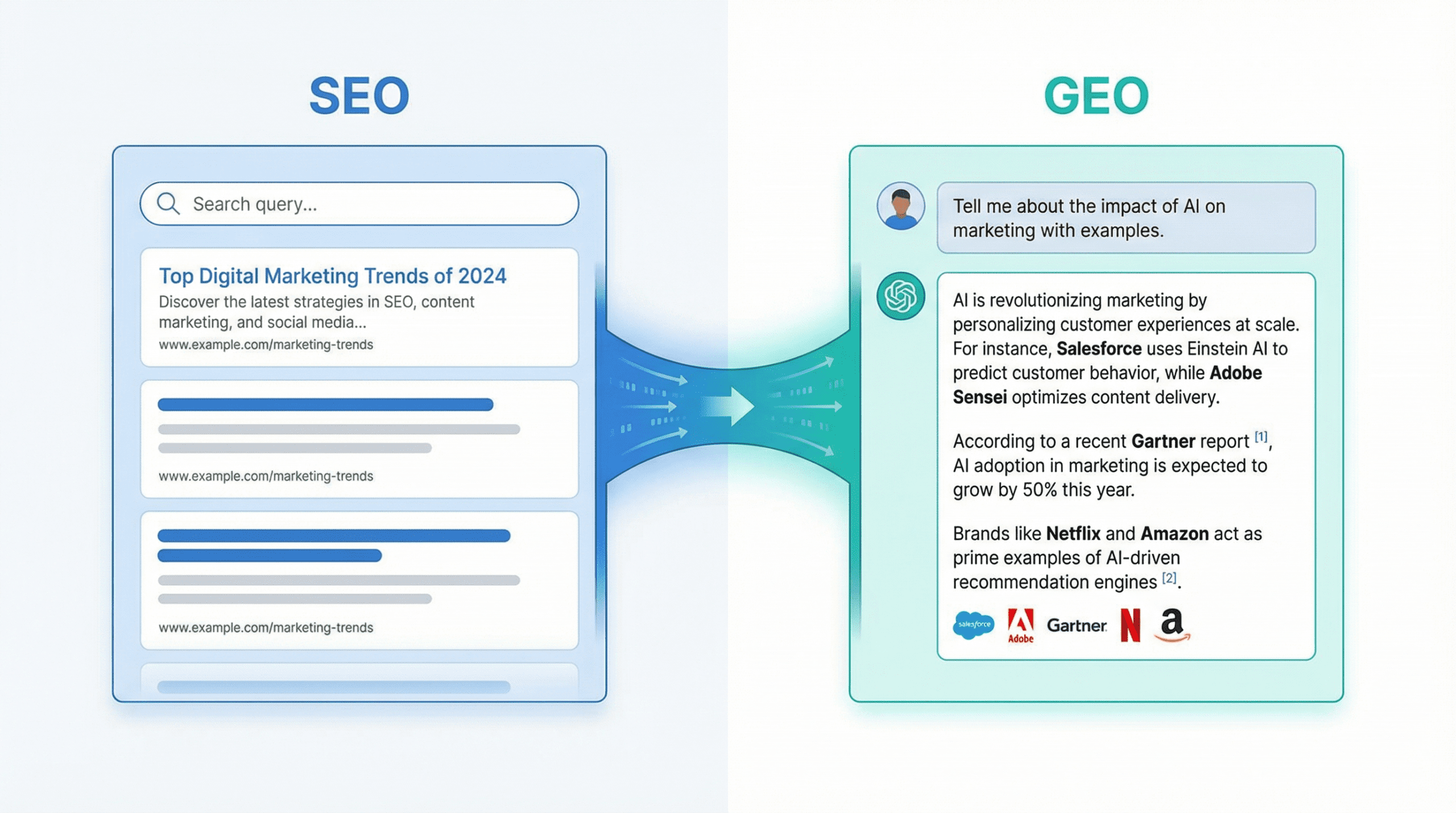
Generative Engine Optimization (GEO) is the practice of creating and structuring content to be prominently featured, cited, and recommended within the AI-generated responses of platforms like Google’s AI Overviews, ChatGPT, and Perplexity. If SEO is about securing the best shelf space in the vast library of the internet, GEO is about having your content selected and read aloud by the librarian, who is now an AI, to an audience seeking immediate and comprehensive answers.
Unlike traditional search engines that present a list of links for users to sift through, generative engines synthesize information from a multitude of sources to construct a single, coherent, and context-rich narrative. This fundamental shift from a list of results to a synthesized answer requires a new approach to content optimization, one that prioritizes clarity, authoritativeness, and a structure that is easily digestible by AI algorithms.
The Shifting Landscape: From Search to Synthesis
The rapid adoption of AI-powered search is not a fleeting trend; it represents a fundamental evolution in user behavior. Users are increasingly turning to conversational queries, asking complex questions in natural language and expecting direct, comprehensive answers. This move from keyword-based searching to conversational discovery is at the heart of the GEO revolution.
Generative engines are designed to meet this demand for synthesized information. They crawl the web, not just to index pages, but to understand and extract key information, which they then weave into a cohesive narrative. This process of synthesis is what makes GEO so different from SEO. It’s no longer enough to be on the first page of search results; the new goal is to be a trusted source of information that AI engines choose to include in their answers.
GEO vs. SEO: A Tale of Two Optimizations
While GEO represents a new paradigm in digital marketing, it does not render SEO obsolete. Rather, GEO builds upon the foundational principles of SEO, adapting them to the unique demands of a generative AI-driven world. The following table highlights the key distinctions between these two critical disciplines:
| Feature | Search Engine Optimization (SEO) | Generative Engine Optimization (GEO) |
|---|---|---|
| Primary Goal | Rank high in search engine results pages (SERPs) | Be featured and cited in AI-generated answers |
| Success Metrics | Rankings, click-through rates (CTR), organic traffic | Brand mentions, share of voice in AI answers, sentiment analysis |
| Optimization Focus | Keywords, backlinks, domain authority, page speed | Content structure, clarity, factual accuracy, citation-worthiness |
| User Queries | Short, keyword-based queries (e.g., “best CRM software”) | Long, conversational queries (e.g., “What is the best CRM software for a small business and why?”) |
| Content Structure | Optimized for crawlers and user readability | Structured for easy extraction and synthesis by AI (e.g., clear headings, bullet points, self-contained paragraphs) |
| Credibility Signals | Backlinks from authoritative websites, domain age | Mentions on trusted platforms, author expertise, positive user reviews |
It is crucial to understand that a strong SEO foundation is a prerequisite for successful GEO. The principles of creating high-quality, authoritative content and ensuring your website is technically sound are more important than ever. GEO is not a replacement for SEO, but an essential evolution that adapts to the changing realities of how users discover and consume information.
Why Your Brand Can’t Ignore GEO in 2026
The transition to an AI-first world of information discovery is happening at an accelerated pace. Brands that fail to adapt to this new reality risk becoming invisible to a growing segment of their target audience. Here are the key reasons why your brand must embrace GEO as a core component of its marketing strategy in 2026:
The Future of Discovery is Here: AI-powered search is rapidly becoming the primary means by which users find information. To remain relevant, your brand must be visible where your audience is searching.
Maintain and Grow Your Visibility: As users increasingly rely on AI-generated answers, brands that are not optimized for GEO will see a significant decline in their organic visibility and traffic.
Drive Highly Qualified Traffic: While GEO may not always result in a direct click, being cited as a trusted source by an AI engine builds brand authority and can drive highly qualified traffic from users seeking more in-depth information.
Build Unshakeable Trust and Authority: In an era of information overload, being consistently referenced by AI engines positions your brand as a credible and authoritative voice in your industry.
Gain a Powerful Competitive Advantage: The brands that are early to adopt and master GEO will establish a significant and sustainable competitive advantage in the years to come.
How to Prepare for the GEO Revolution: A 5-Step Framework
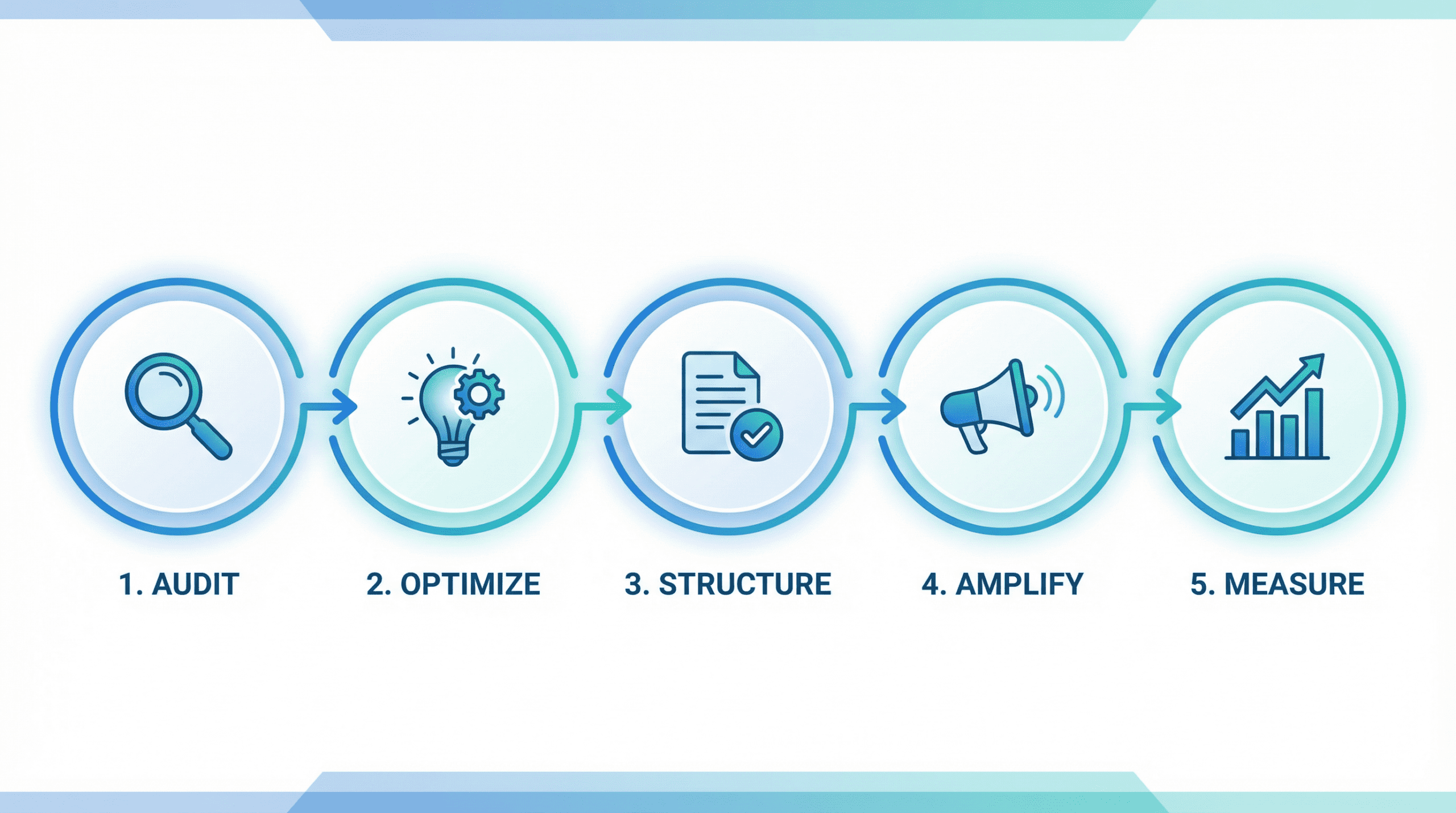
Transitioning to a GEO-centric approach requires a strategic and multi-faceted effort. Here is a five-step framework to guide your brand’s journey into the new era of generative engine optimization:
Embrace a Multi-Platform Presence: Your website is no longer the sole focus of your optimization efforts. AI engines draw information from a wide range of sources, including forums like Reddit and Quora, industry publications, and video platforms like YouTube. Establishing a strong and authoritative presence on these platforms is essential for GEO success.
Structure Content for Clarity and Extraction: Your content must be structured in a way that is easily digestible for AI algorithms. This means using clear and descriptive headings, leveraging bullet points and numbered lists to break down complex information, and writing in self-contained paragraphs that can be easily extracted and repurposed within an AI-generated answer.
Double Down on E-E-A-T: The principles of Experience, Expertise, Authoritativeness, and Trustworthiness (E-E-A-T) are more critical than ever in the age of GEO. Invest in creating high-quality, well-researched content, showcase the expertise of your authors, and actively seek out third-party validation through reviews and mentions on reputable websites.
Master the Art of the Narrative: AI-generated answers are often presented in a narrative format. Craft your content to tell a compelling story, providing a clear and logical flow that makes it more likely to be integrated into a synthesized response.
Develop a GEO-Specific Measurement Strategy: Traditional SEO metrics are not sufficient to measure the success of your GEO efforts. You need to develop a new set of key performance indicators (KPIs) that include brand mentions, share of voice in AI answers, and sentiment analysis to track your progress and refine your strategy.
Frequently Asked Questions About GEO and SEO
What is Generative Engine Optimization (GEO)?
Generative Engine Optimization is the practice of optimizing your brand\’s content and digital presence to be accurately cited and recommended by AI-powered search engines like Google\’s AI Overviews, ChatGPT, and Perplexity. Unlike traditional SEO, which focuses on ranking in a list of blue links, GEO focuses on being the source that AI trusts and references when generating answers.
Is GEO replacing SEO?
No. GEO is not replacing SEO; it is evolving alongside it. Traditional SEO remains critical for organic search visibility. However, as more users interact with AI-generated answers, brands that ignore GEO will lose visibility in this rapidly growing channel. The most effective strategy integrates both SEO and GEO.
How do I optimize my content for AI search engines?
The key principles of GEO include providing clear, authoritative, and well-structured content; building strong E-E-A-T signals (Experience, Expertise, Authoritativeness, Trustworthiness); using schema markup and structured data; and ensuring your brand is consistently cited across reputable sources on the web.
What is the difference between SEO and GEO?
SEO optimizes for ranking positions in traditional search engine results pages (SERPs). GEO optimizes for citation and recommendation within AI-generated answers. SEO success is measured by rankings and click-through rates. GEO success is measured by brand mentions, citation frequency, and sentiment within AI responses.
Why should my business care about GEO in 2026?
AI-powered search is growing rapidly. Research indicates that a significant and increasing percentage of search queries now trigger AI-generated responses. If your brand is not optimized for these AI engines, you are invisible to a growing segment of your potential audience. Early adopters of GEO will have a significant competitive advantage.
Related Reading
About Colling Media
Colling Media is a full-service advertising agency headquartered in Phoenix, Arizona, specializing in Brand, Demand, Performance, and Nurturing (BDPN) strategies. With deep expertise in attribution, media buying, and data-driven marketing, Colling Media helps brands across industries including education, home services, transportation, and technology achieve measurable growth. Learn more at collingmedia.com.
References [1] Generative engine optimization (GEO): How to win AI mentions [2] Generative engine optimization: What we know so far about generative SEO